Why diets miss the fundamental problem
Diets have a fundamental problem: they define health as the absence of something. Too many calories, too much sugar, too many carbs, too many meals per day. The tool is always restriction — and restriction creates resistance.
There's a simple reason: our bodies aren't built for restriction, they're built for survival. When food becomes scarcer, metabolism slows, hunger rises, and every lapse from the plan becomes a small victory of the body over willpower. That's not failure — that's evolution.
Meanwhile, every diet fights a problem it hasn't actually solved: what exactly is missing from the average Western diet? The answer from microbiome research is surprisingly clear: not fewer calories. More different plants.
An analysis of over 11,000 people in the American Gut Project (McDonald et al., 2018) shows: eating more different plant species per week tells us more about gut microbiome health than calories, macros, or dietary category (vegan, vegetarian, omnivore). People eating 30 or more different plant species a week have significantly more diverse microbiomes — regardless of whether they eat meat.
That's not a minor detail. A diverse microbiome is linked to less inflammation, more stable blood sugar, a stronger immune system, and even better mood. It's the opposite of what a diet typically promises — and it comes from adding, not subtracting.
The microbiome: why 100 trillion bacteria insist on variety
Around 100 trillion tiny living things inhabit the human gut — mainly bacteria, plus fungi, viruses, and other microbes. This community, the gut microbiome, isn't a passive tenant. It digests food, produces signalling molecules, and constantly communicates with the immune system.
The most important fuel for gut bacteria is dietary fibre — the indigestible fibres from plants. And different bacteria need different fibres: Bifidobacterium loves inulin (in chicory, onions, bananas), Akkermansia thrives on polyphenols from dark berries and pomegranate, Faecalibacterium prausnitzii — one of the most important anti-inflammatory bacteria — needs resistant starch from cooled rice, lentils, and legumes.
This process produces short-chain fatty acids — mainly butyrate, acetate, and propionate:
- Butyrate feeds the gut wall cells, protects the intestinal barrier, and reduces chronic inflammation.
- Propionate helps regulate blood sugar.
- Acetate acts on the brain — including satiety signals.
Justin Sonnenburg from the Stanford Human Food Project puts it plainly: The gut microbiome is starving in the Western diet — not from lack of calories, but because most people eat too few different plant species. Bacteria that can't find the right fibres die out — and their useful products disappear with them.
A diet that cuts calories or carbs doesn't fix this. It changes the amount, not the variety. Someone eating 1,500 instead of 2,000 calories but the same 10 plant species hasn't improved their microbiome.
Why plant diversity does more than calorie control
One of the most interesting studies of recent years comes from the Sonnenburg Lab at Stanford University: Wastyk et al. (Cell, 2021). Two groups were compared over ten weeks: one ate a high-fibre diet (many different plants, legumes, whole grains), the other ate lots of fermented food (yogurt, kefir, kimchi, sauerkraut, kombucha).
The surprise: not the fibre group but the fermented food group had the more diverse microbiome after ten weeks — alongside significantly lower inflammation markers. Both together would be ideal. What the study shows: the microbiome can be changed, and different approaches work in different ways.
What both approaches share: they add something instead of removing something. That's the difference from a classic diet.
The ZOE study (an ongoing investigation with over 15,000 participants, Spector et al.) makes this even clearer: plant diversity is the single strongest nutritional factor for a healthy microbiome — stronger than caloric content, macros, total fibre, or meal frequency. Not how much veg, but how many different kinds.
That's the real message against the usual nutrition thinking: health starts with more, not less. A week with 30 different plant species changes your gut microbiome more than a week of intermittent fasting — without hunger, without bans, without depleting willpower.
Not because fasting is useless — it has its own effects (cell renewal, better insulin response). But because most people who fast eat the same few plant species as before — just at different times.
What this means in practice: no restrictions, but a different question
The mindset shift sounds simple, but it's not automatic in everyday life: instead of asking "what am I not allowed to eat today?" you ask: "which plant species am I still missing this week?"
This changes how you shop, cook, and plan. A few concrete examples:
While cooking: instead of just carrots, add carrot + parsnip + parsley + a pinch of cumin. Four plants instead of one — same bowl, five extra seconds.
While shopping: not "what's on sale?" — that usually lands you in the same routine. Instead: "which two varieties I haven't had this week are available today?" In winter maybe parsnips, celeriac, Jerusalem artichoke; in summer fennel, kohlrabi, an unfamiliar salad green.
While seasoning: spices and herbs count as plants — turmeric, cumin, coriander, thyme, oregano. Deliberately rotating your spice drawer adds 5–8 plant species per week with no extra cooking time.
At breakfast: oats + two berry types + one nut + chia seeds = 4–5 plants before lunch. Yogurt with walnuts, fig, and pumpkin seeds gets to similar numbers.
None of this adds up to a diet — no plan to follow or fail at. It's a simple rule: eat at least as many different plant species each week as you did the week before. Then one more.
The big advantage over a diet: there's no failing. Someone who eats 22 plant species this week hasn't lost — they're 22 ahead of where they were when they started from 10.
How mangia makes plant diversity visible
The challenge with plant diversity is the same as with many habits: you don't know where you stand until you start tracking. And when you start tracking, the joy of cooking evaporates.
Mangia solves this by having the count emerge automatically from your weekly plan:
- You plan your week — which recipes you want to cook. No new system, no overhaul, no extra lists.
- The balance counts for you — mangia recognises every ingredient in your recipes, maps it to a plant species (cherry tomatoes = tomatoes, tomato sauce = tomatoes, sun-dried tomatoes = tomatoes: one plant, not three), and sums up your week.
- You see your number — "23 / 30 plants this week" — and can immediately see which plant species are already in and which are still missing.
What this changes: seeing the number makes people naturally plan more variety. Not because they have to count, but because the number reflects what they're doing. The same effect as a step counter: not forcing motivation, but making behaviour visible.
The plant diversity display is part of mangia Pro.
A sample week: over 30 plants without eliminating a single meal
Here's what 30 plants looks like in a normal week — from a real mangia plan (anonymised). Not vegetarian, not vegan — ordinary mixed diet:
Monday — pasta bolognese: carrot, celery, onion, tomato, garlic, oregano, wheat (pasta) = 7 plants
Tuesday — lentil stew with bread: red lentils, parsnip, leek, thyme, bay leaf, rye (bread) = 6 plants (+6 new)
Wednesday — chicken with roasted veg: broccoli, sweet potato, pepper, turmeric, cumin, lemon zest = 6 plants (+6 new)
Thursday — oat breakfast + leftovers: oats, blueberry, walnut, cinnamon + lentil leftovers = 4 plants (+4 new)
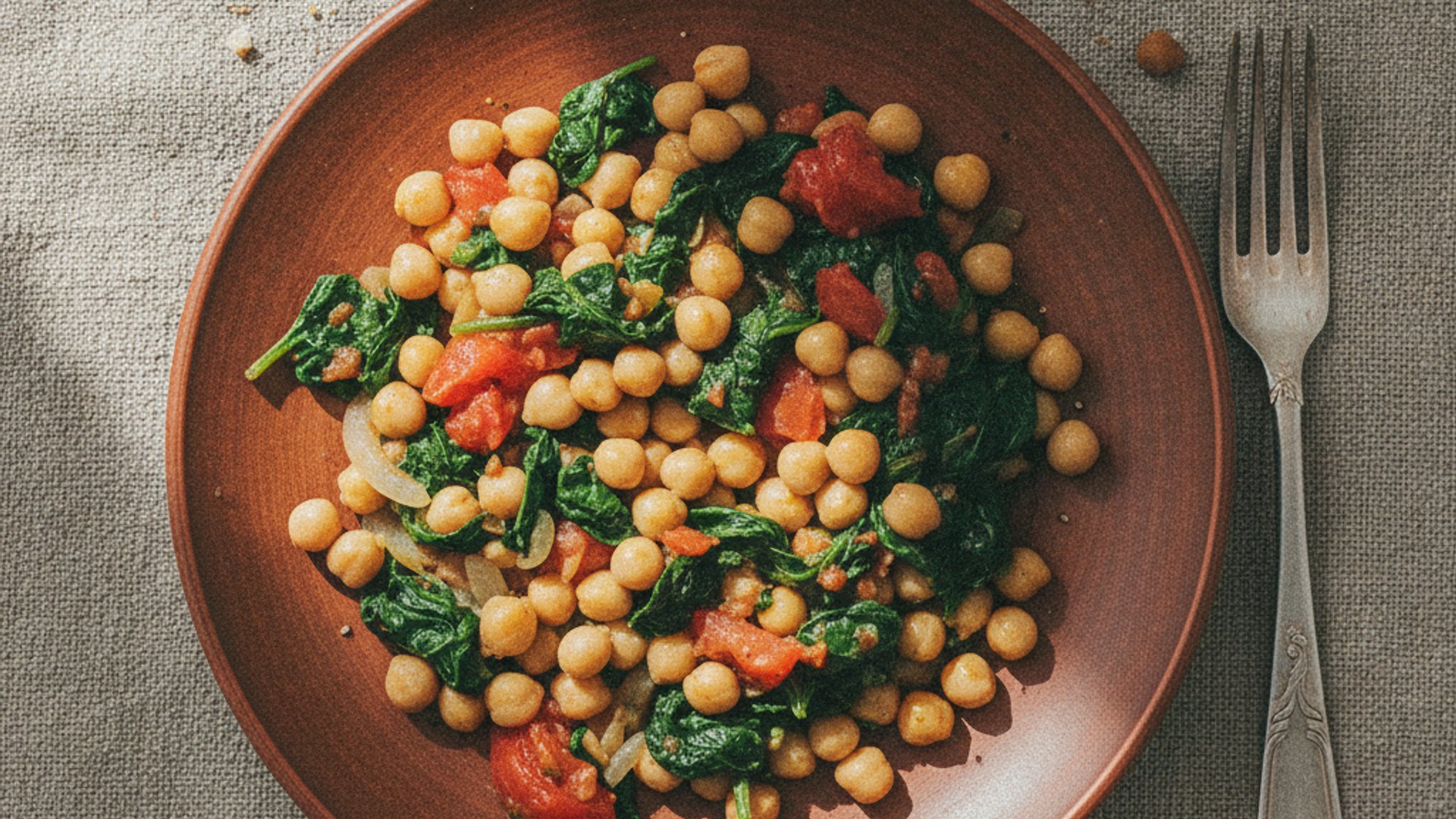
Friday — buddha bowl: chickpeas, quinoa, spinach, red cabbage, avocado, sesame, parsley, pomegranate = 8 plants (+8 new)
Weekend — omelette, salad, soup: egg (not a plant), cucumber, tomato (already counted), feta, pumpkin, chia seeds, basil, ginger, mushroom = 6 new plants
Total: 37 plant species — normal shop, normal cooking time, no meal eliminated.
The pattern behind it: one bowl per week (Friday) with at least 7 plants, one legume dish (lentils), oats for breakfast (2–3×), different herbs and spices used consistently. The rest takes care of itself.
No meat-free days. No calorie counting. No willpower feat. Just a different question when planning the week: which plant species am I still missing?
Plant diversity, counted automatically.
Track plant diversity